Home » Ma! news » La Fabbrica della pasta: How is fresh pasta made at Ma!?
La Fabbrica della pasta: How is fresh pasta made at Ma!?
News
Published on 6 November 2026
A spinning fork, a few strands of spaghetti twining around it, sauce accompanying every bite… At Ma!, we love the pleasures that seem simple. And we know just how much work goes into a good plate of pasta before it reaches the table.
Our “Fabbrica della pasta” plays a central role in our Italian cuisine. Under this heading, our menu features fresh pasta from Tavola, made with top-quality flour from Piedmont. Spaghetti, paccheri, rigatoni: familiar shapes, but very different ways to pair them with a sauce.
To understand how fresh pasta is made, we invite you to trace the process from start to finish—from the raw ingredients all the way to cooking. Along the way, you’ll find some insights from the trade, tips for enjoying it to the fullest, and the belief that guides us in the kitchen: good pasta deserves just as much attention as the sauce that accompanies it.
La Fabbrica della pasta, at the heart of our Italian cuisine
In Italian, “fabbrica della pasta” means “pasta factory.” For us, this expression evokes a whole world of recipes, textures, and culinary delights. It embodies everything we love about Italian cuisine: carefully selected ingredients and a level of craftsmanship that is immediately apparent on the plate.
Our elegant Italian broth combines the warm hospitality of Parisian fine-dining restaurants with the generous spirit of trattorias. Pasta is a natural fit here. We like our pasta to be approachable and flavorful—something that appeals to both cheese and pepper lovers and fans of slow-simmered sauces alike.
Understanding What “Fresh Pasta” Means What is the difference between fresh pasta and dried pasta? It mainly comes down to their water content and how they are stored. Dried pasta undergoes a drying process that allows it to be stored for a long time. Fresh pasta remains moister and requires proper storage, usually in the refrigerator.
This difference affects how they behave during baking. Fresh dough usually bakes faster, but its thickness and composition are still key factors. A thick tube and a thin ribbon require different levels of attention.
We also like to remind you that fresh pasta has its own character. It can be supple, delicate, or more or less firm, depending on the recipe. To truly appreciate it, we invite you to pay attention to its texture as well as its freshness: Does it hold up well when you pick it up with a fork? Is it pleasant to chew? Does it let the sauce shine through?
Before the shape, before the sauce, there is the dough itself. The choice of flour or semolina affects how the dough absorbs moisture, how it is worked, and how it holds up during cooking.
At Ma!, our menu features top-quality flour from Piedmont. What matters most to us is what this selection brings to the plate: a dough that holds its shape and complements our dishes without becoming mushy.
Flour, Semolina, and Hydration: Understanding Their Roles
The production of fresh pasta relies on a combination of grain-based ingredients and ingredients that provide moisture. Depending on tradition and shape, recipes may include flour, semolina, water, or eggs.
We therefore avoid reducing all Italian pastas to a single formula. Dough intended to be rolled out into sheets and dough intended to be extruded through a die are subject to different constraints.
Hydration is essential for achieving a consistent mixture that is strong enough to withstand the rest of the process. A mixture that is too dry becomes difficult to work with; one that is too wet may stick. This is where the value of craftsmanship lies: understanding the material and adapting one’s technique to its behavior.
From mixing to kneading: giving the dough structure
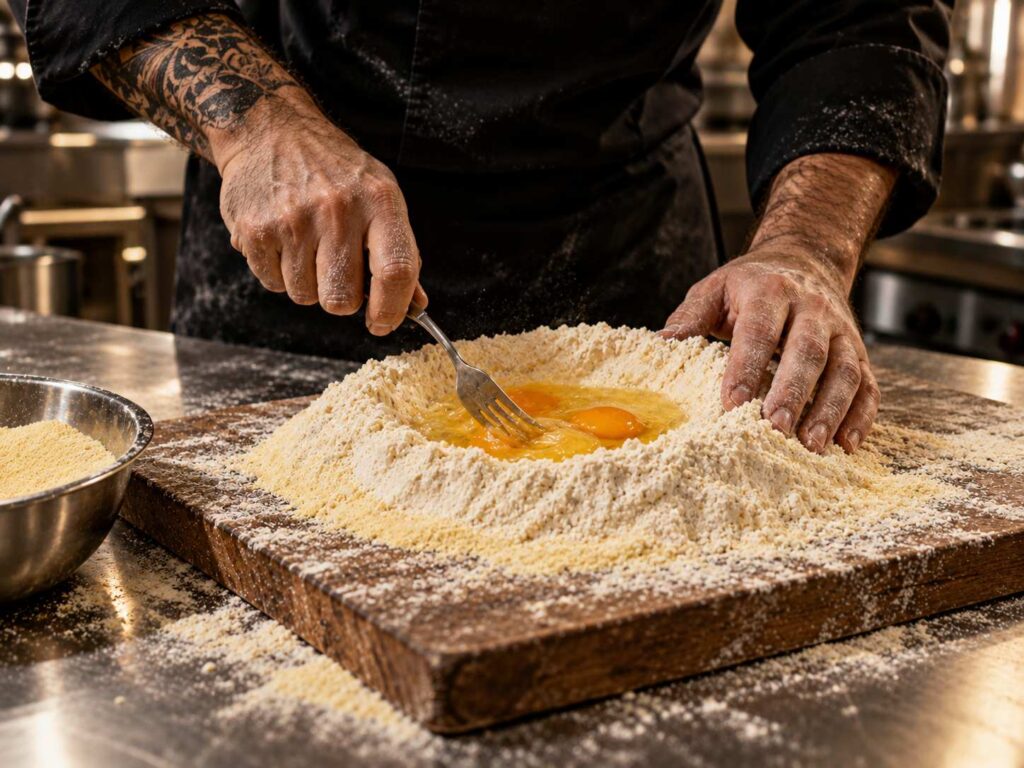
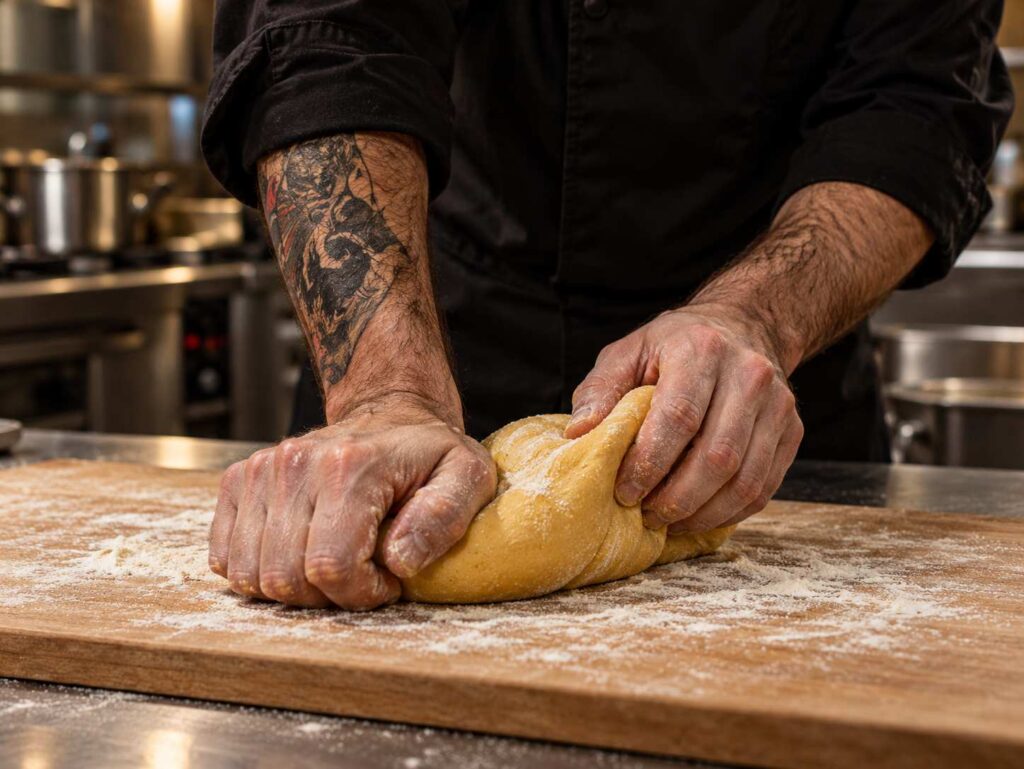
To explain the manufacturing process, we begin by mixing the ingredients. This first step distributes moisture throughout the grain mixture. Kneading then continues the process until a uniform mixture is achieved.
In wheat-based doughs, hydration and mechanical mixing help develop a gluten network. This structure contributes to the dough’s cohesion and its ability to be shaped.
Finding the right balance between flexibility and strength
We can compare this step to preparing a material that we then want to stretch or shape. It must be able to withstand the process without tearing, while still retaining enough strength.
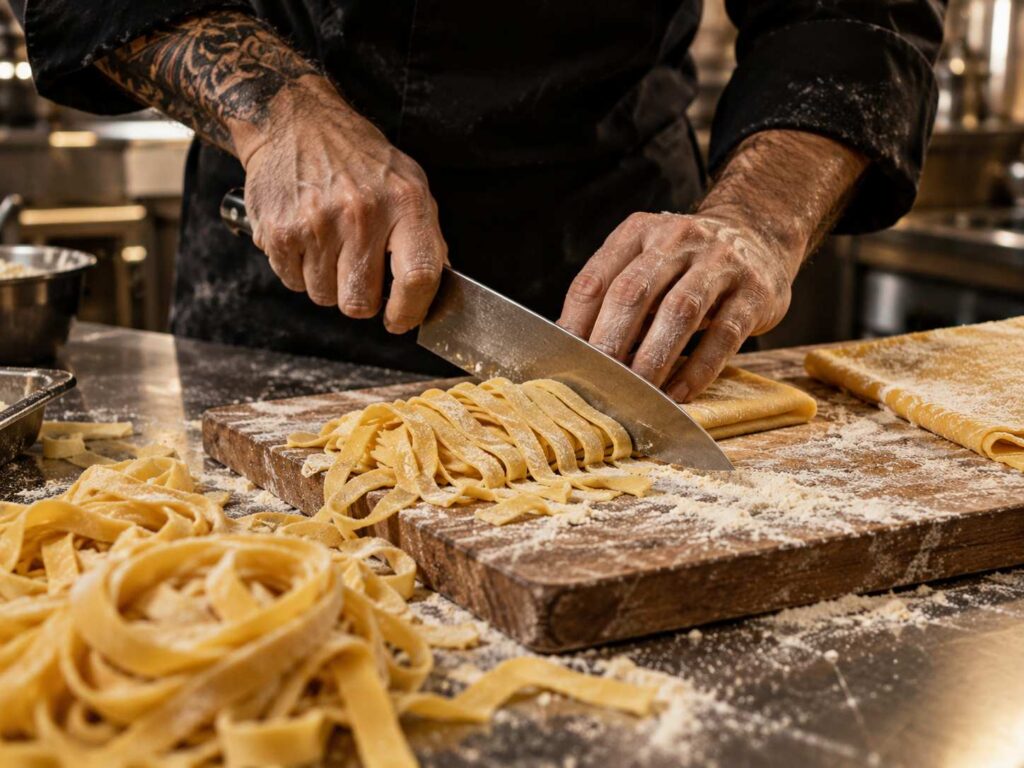
For certain types of dough, particularly those that are rolled out, resting also plays a useful role. It allows the moisture to distribute evenly and the dough to relax, making it easier to roll out. The resting times depend on the recipe and the method; we prefer to explain their purpose rather than provide a single time that applies to all preparations.
If you’re making pasta at home, keep this tip in mind: dough that keeps shrinking under the roller may need to rest. Forcing it further doesn’t always solve the problem.
Spaghetti, for a sauce that coats every strand
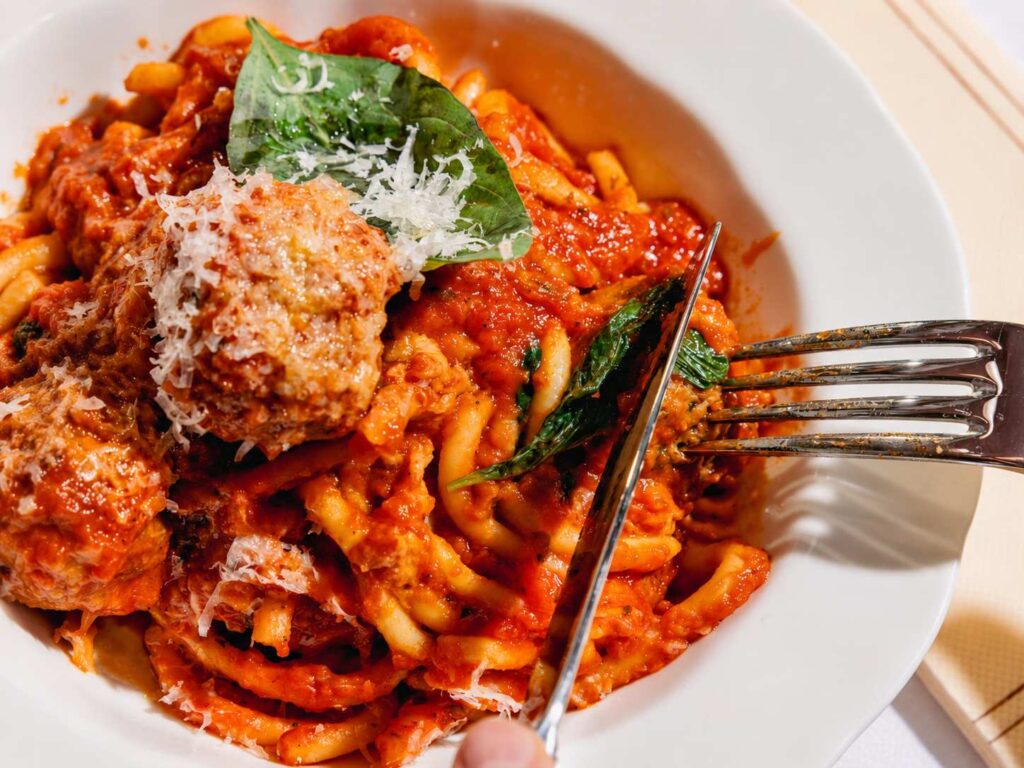
Spaghetti wraps easily around a fork. Its length makes it easy to form a bite-sized portion where the sauce is distributed across several strands.
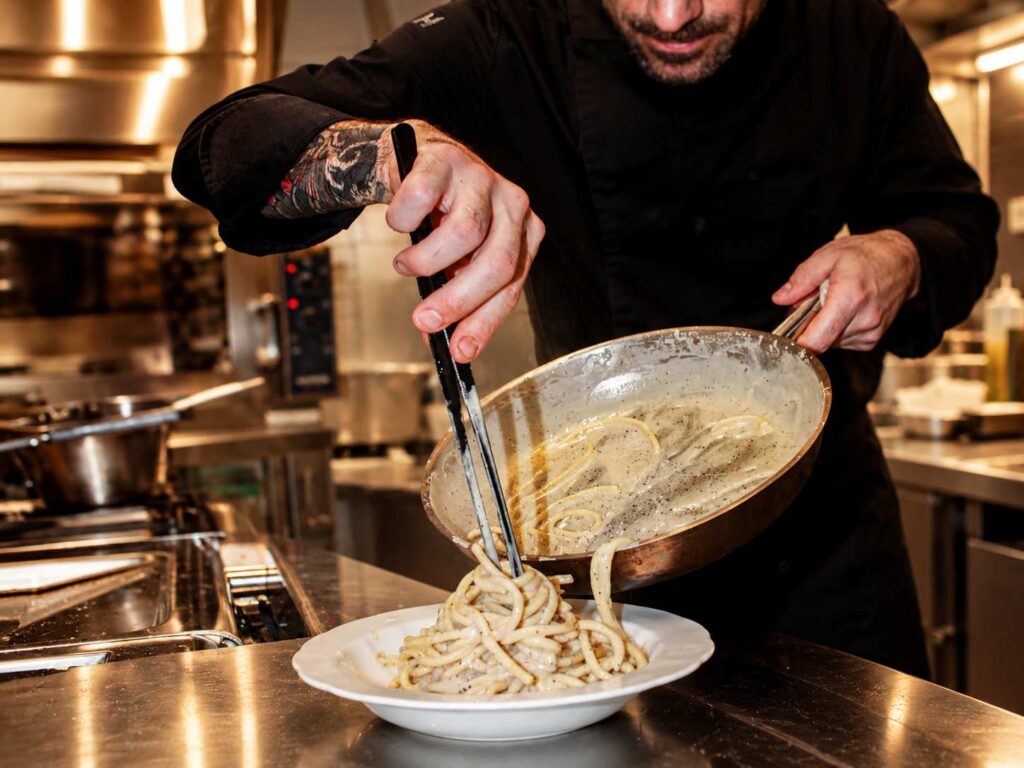
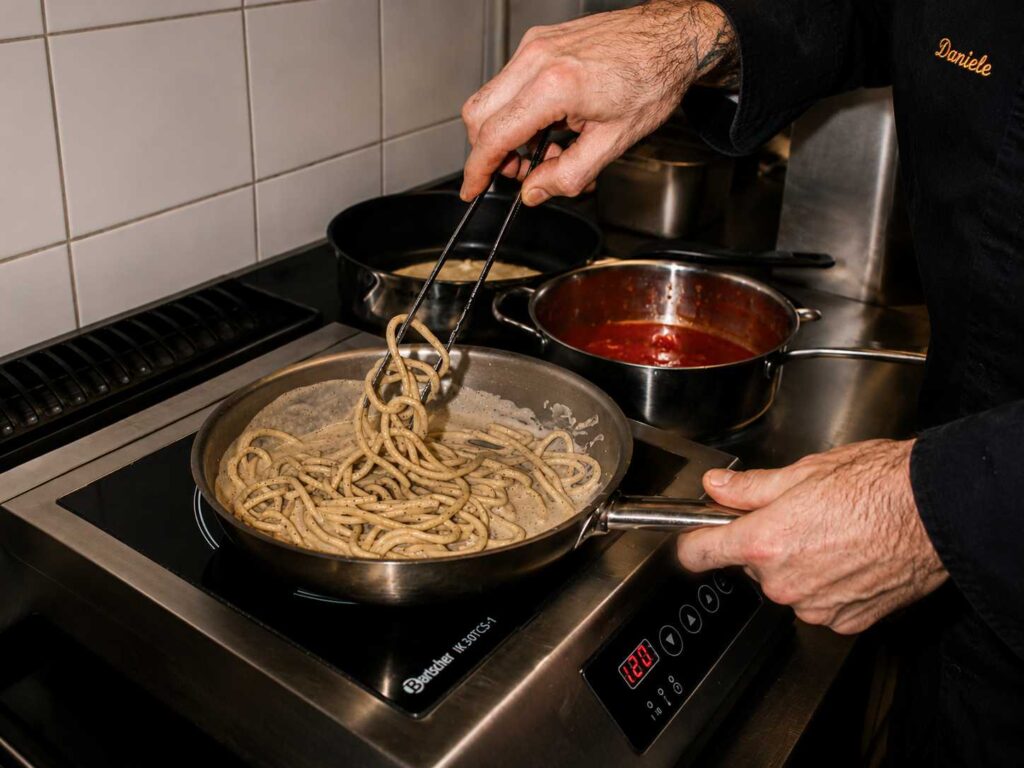
We serve them, for example, in spaghetti cacio e pepe. This combination of cheese and pepper highlights the dish’s balance: a sauce thick enough to coat the pasta, a pleasant texture, and a distinct flavor with every bite.
To fully appreciate this pairing, we suggest you take a bite as soon as the dish is served. The temperature plays a key role in creating a sensation of smoothness and creaminess.
Paccheri, perfect for hearty sauces
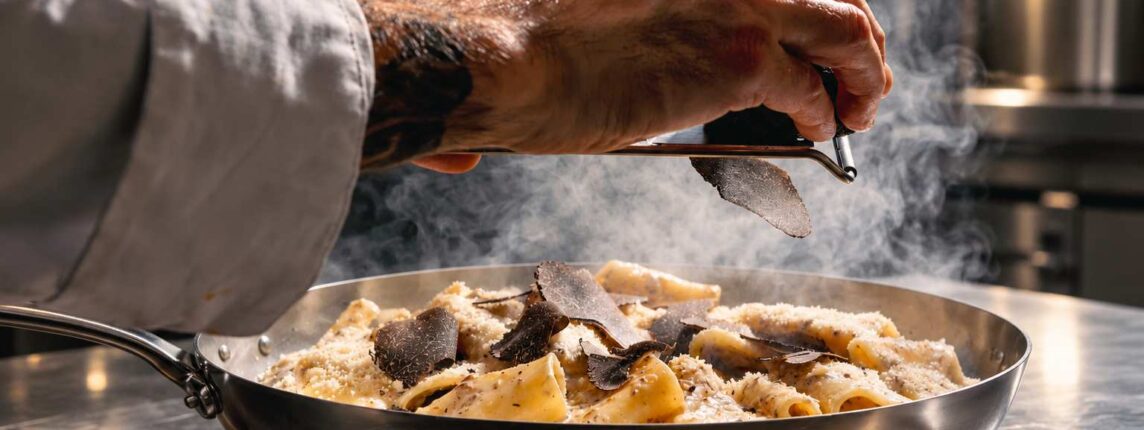
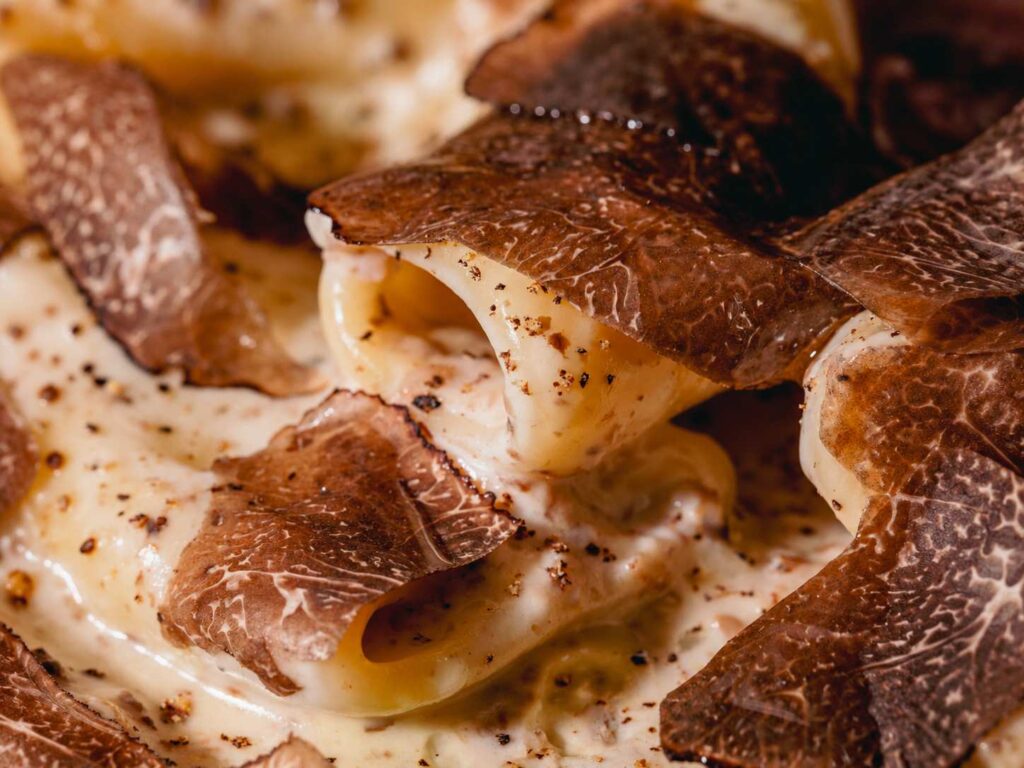
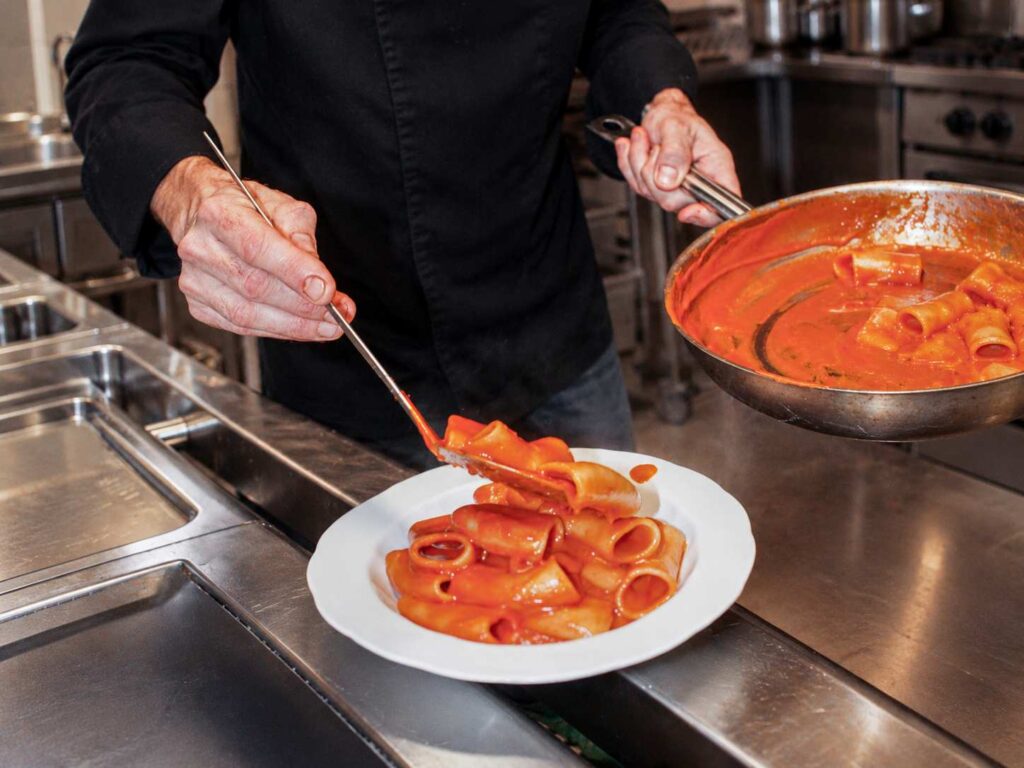
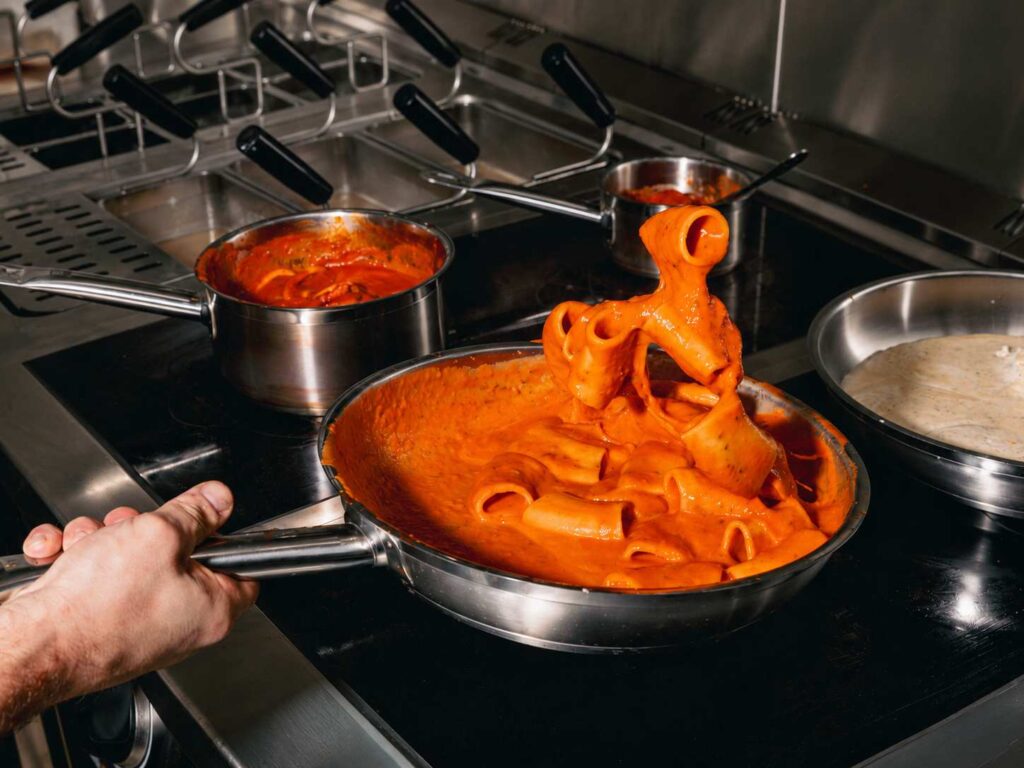
With their wide opening, paccheri offer a generous bite. They feature in our alla genovese recipe with beef ragù, as well as in La Bellucci, with mushrooms and truffles.
It’s easy to see why they’re so popular from the very first bite: we enjoy the dough, the crust, and the filling all at once. A sauce that’s too runny would leak out quickly; a well-bound mixture stays in place better.
Rigatoni: A Delightful Gratin
We also love rigatoni au gratin, which offers a different kind of experience. Their hollow shape and ridged surface make them ideal for hearty dishes, while baking them in the oven creates a golden, crispy top.
This recipe reminds us that a pasta dish can combine several textures. Beneath the golden top, we hope to find a soft, creamy filling and pasta that’s still recognizable. The contrast is a big part of what makes it so enjoyable.
At Ma!, our expertise is reflected in the joy of eating
From raw ingredients to shape, from kneading to cooking—understanding pasta allows you to appreciate it more fully. Above all, we hope we’ve inspired you to pay attention to what’s happening on your fork: pasta that holds its shape, a sauce that coats it, and a well-balanced bite.
Our Fabbrica della pasta is part of our desire to offer hearty Italian cuisine, where familiar recipes deserve careful attention. We like to explain them in simple terms, then let you enjoy what really matters: the meal, the conversation, and the pleasure of sharing a table.
To recapture that spirit, we welcome you to Boulevard des Italiens in Paris. Whether you prefer spaghetti to twirl or paccheri to savor, we’ll let you choose how you say “buon appetito.”
See also
A Short Italian Glossary of Broth Terms: Words to Know at Ma!
5 October 2026
Antipasti, aperitivo, primi, dolci… Learn the essential terms of Italian…