Home » Ma! news » Spaghetti Cacio e Pepe: The Iconic Dish of Roman Cuisine
Spaghetti Cacio e Pepe: The Iconic Dish of Roman Cuisine
News
Published on 3 July 2026
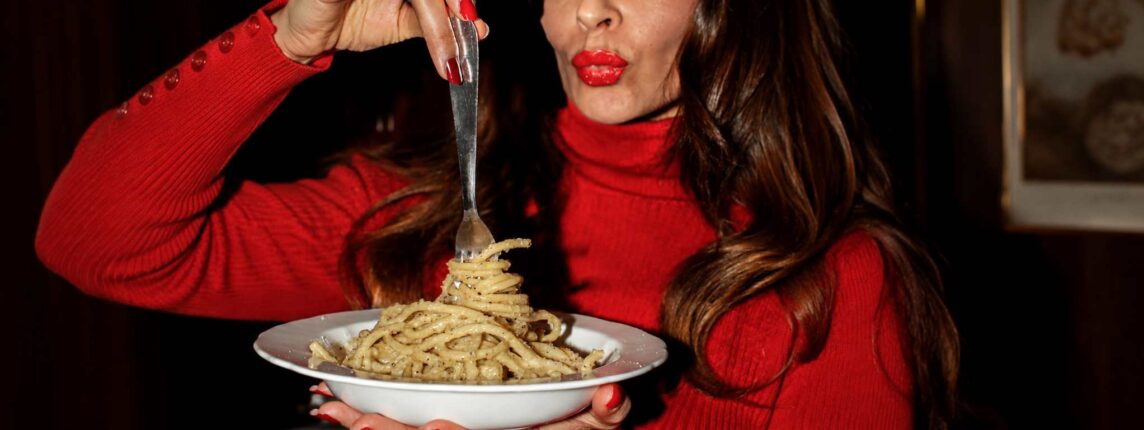
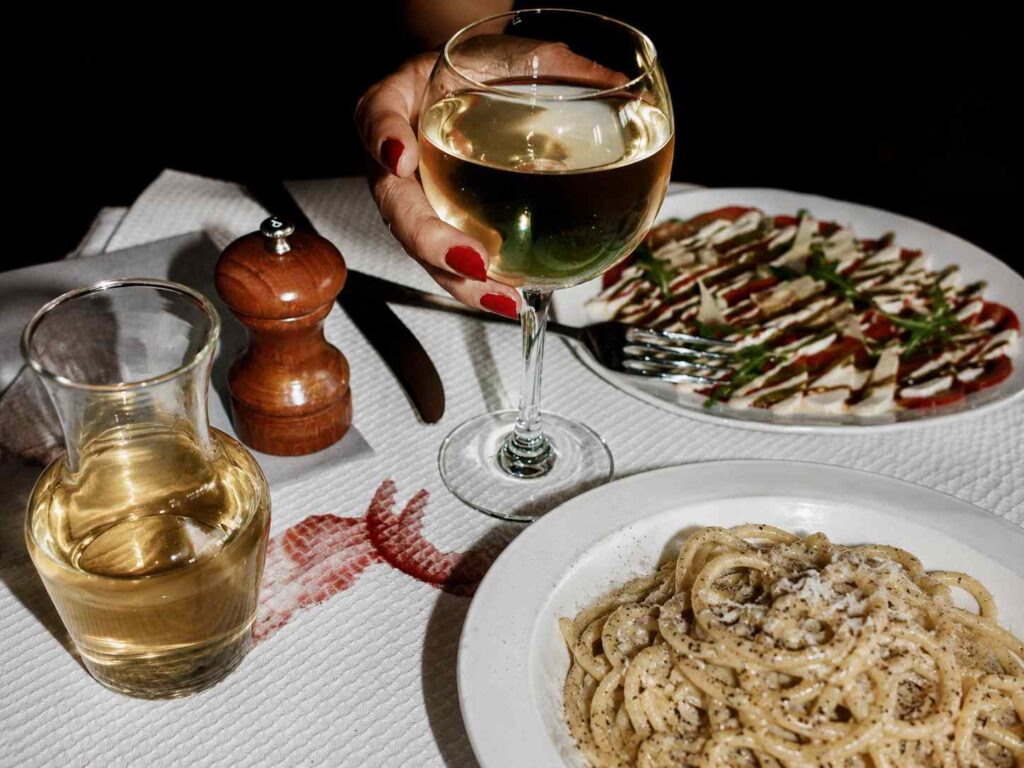
Three ingredients. Not one more. That’s the paradox of Cacio e Pepe: a dish that’s disarmingly simple on paper, yet demands formidable technical skill to execute. This Roman classic is now one of the most sought-after—and most misunderstood—Italian dishes outside of Italy. At Ma!, a chic Italian restaurant in the 9th arrondissement, they pay homage to it with the precision it deserves, without ever resorting to the easy solution of adding cream.
Where does Cacio e Pepe come from?
Cacio e Pepe (“cheese and pepper” in the Roman dialect) originated in the countryside of Lazio, where migratory shepherds carried dried pecorino and black pepper with them—two ingredients that had the immense advantage of keeping well during long journeys through the mountains. They mixed them with dry pasta cooked in water to create a hearty, quick-to-prepare, and unpretentious dish.
Even today, Cacio e Pepe is considered, along with Carbonara and Amatriciana, one of the three pillars of traditional Roman cuisine—the famous “trinity” of Roman pasta dishes—which can be found on every menu in the trattorias of the Italian capital. These three dishes share the same philosophy: few ingredients, but flawless execution, where even the slightest imperfection is immediately apparent on the plate.
A shepherd’s legend comes true: reserve a table at Ma! and come taste (or give in to—we won’t judge) this dish that traveled across the mountains to end up on your plate.
Why is such a simple dish so hard to get right?
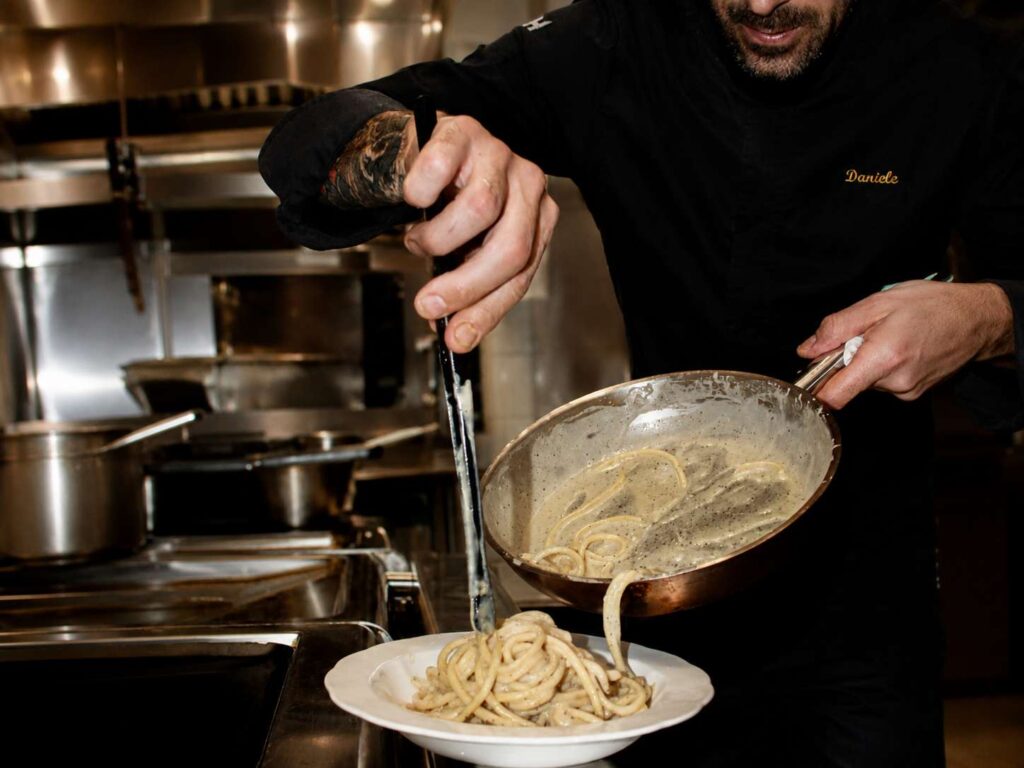
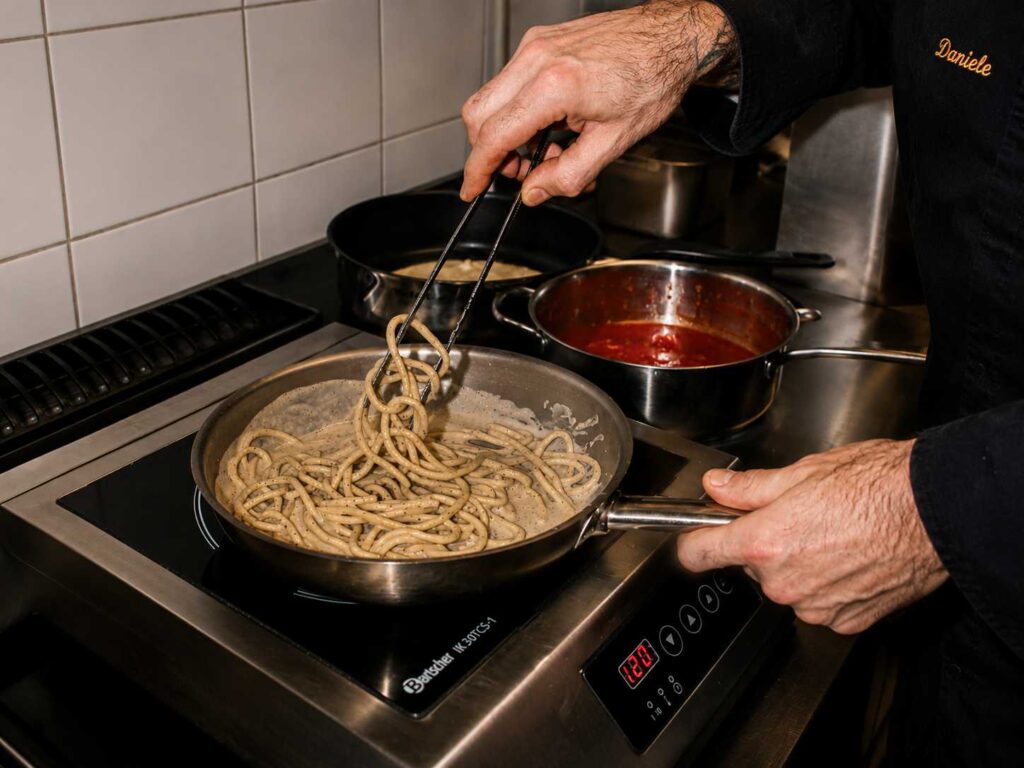
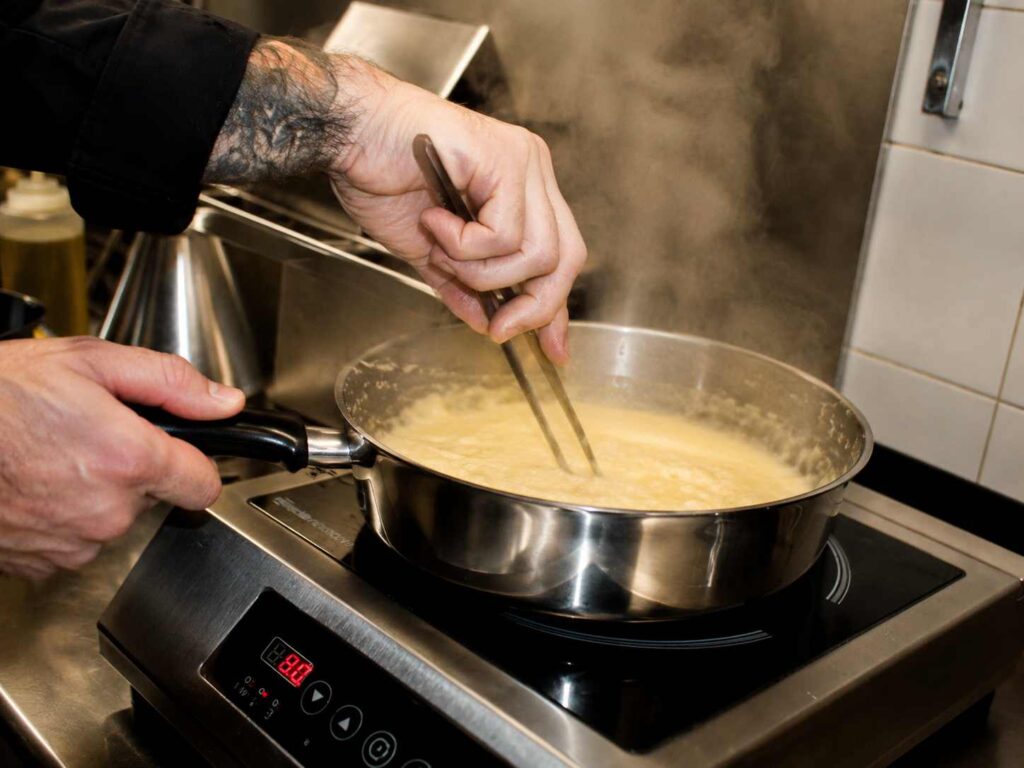
That’s the whole secret of Cacio e Pepe: with no cream, no butter, and no eggs, the sauce must form solely through the emulsion created by the finely grated pecorino, the starch-rich pasta cooking water, and the freshly ground pepper. If it’s too hot, the cheese clumps and forms unsightly strings. If it’s too cold, it won’t bind and will remain powdery at the bottom of the plate. It takes a steady hand, a precise and swift motion, a temperature controlled to the exact degree, and above all, high-quality pasta capable of holding the sauce well—which is precisely what La Fabbrica della Pasta guarantees, the workshop where Ma!’s fresh, homemade pasta is made every day, as we explained in our article on the Ma! concept.
In fact, it’s no coincidence that many Italian chefs consider Cacio e Pepe a true “test” for evaluating a kitchen: a dish this simple leaves no room for half-measures. Every detail the fineness of the grated pecorino, the freshness of the pepper ground to order, and the pasta cooked al dente matters just as much as it does in a much more elaborate dish.
Ma’s Version of Cacio e Pepe!
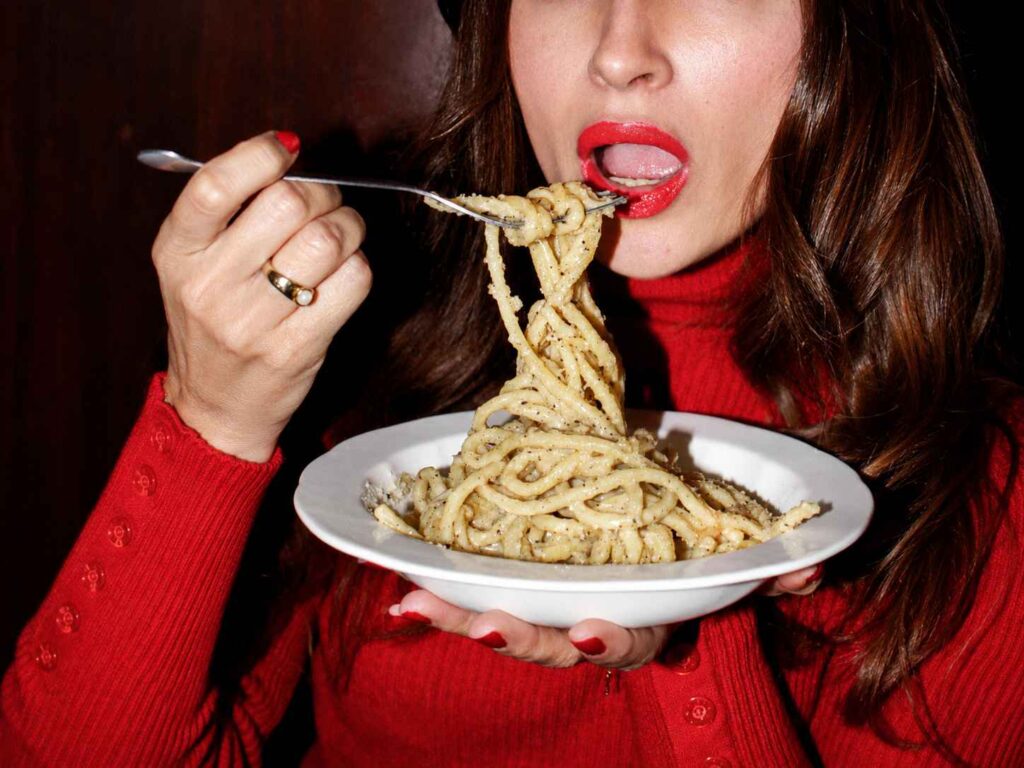
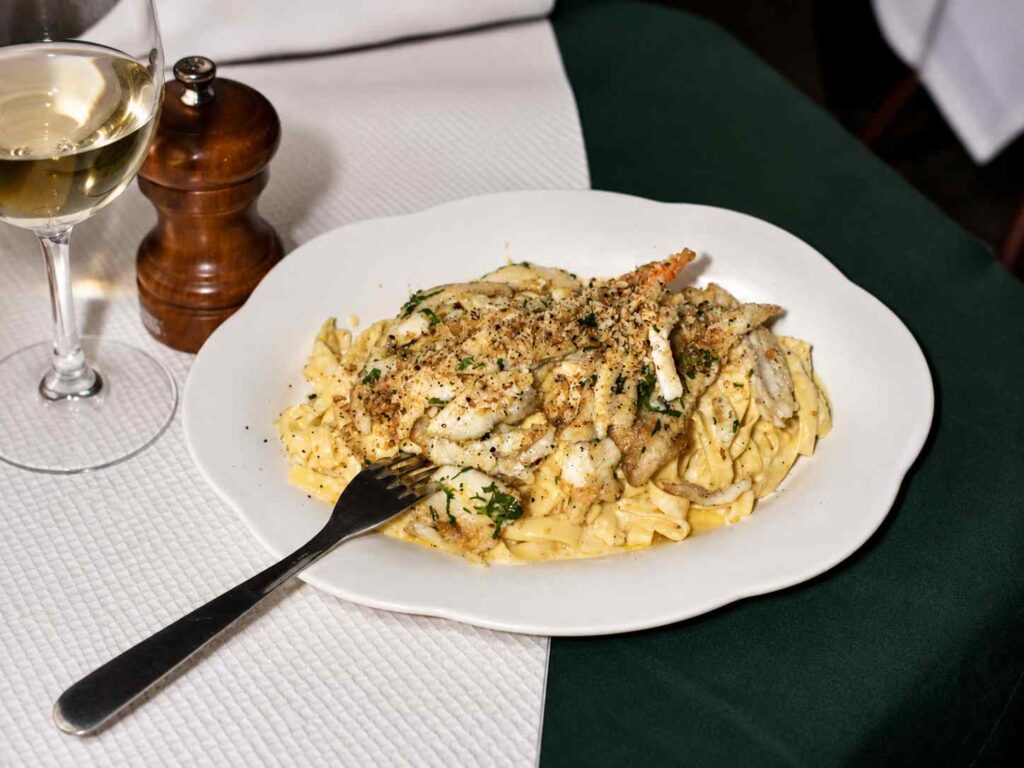
On the “Primi e secondi” menu, Spaghetti Cacio e Pepe is described as “Nonna’s favorite dish”—a deliberate nod to the family tradition that has defined this dish for generations, passed down from grandmothers to grandchildren in kitchens throughout Rome. You can enjoy it plain, in its purest and most traditional form, or enhance it with Saltimbocca-style chicken for those with heartier appetites who want to turn this primi into a more complete meal.
What to Look for in a Good Cacio e Pepe
To tell if a Cacio e Pepe is a success, there are a few telltale signs:
a smooth, glossy sauce, never lumpy or grainy,
freshly ground pepper—never pre-ground powder—which should be detected on the palate in subtle, spicy hints,
pasta cooked al dente in well-salted water and never rinsed after cooking,
And above all, don’t add any cream—a true Cacio e Pepe never needs it, and its inclusion often betrays a simplified recipe that strips the dish of all its original charm.
What should you serve with Cacio e Pepe?
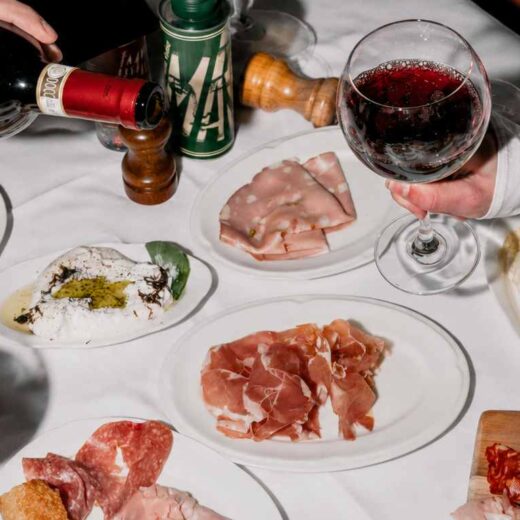
When it comes to pairings, Cacio e Pepe goes particularly well with a dry, lively white wine that can balance the richness of the pecorino without overpowering it. Ma!’s À la verse menu features a Chardonnay IGT Veneto that fulfills this role perfectly. For red wine lovers, a light Sangiovese-Merlot blend is also a good option, provided it doesn’t overpower the dish. For an appetizer, opt for simple antipasti, such as a little bresaola or Grana Padano, so as not to weigh down the meal before the pasta arrives.
Cacio e Pepe is just one example—albeit an iconic one—of the high standards Ma! sets for its fresh pasta. We see the same philosophy in the Paccheri Alla Genovese with beef ragù, the Spaghetti al Limone with green asparagus, and the Piaggo—a rigatoni gratin with cooked ham and fresh truffles that has its devoted fans. The entire menu adheres to this same principle: recipes rooted in Italian tradition, prepared with high-quality ingredients, without ever trying to overcomplicate what doesn’t need to be—all of these dishes are featured in our article on the best Italian specialties to discover at Ma!.
Want to try it?
The best way to understand why this dish has been a favorite among Romans for generations is to taste it and see for yourself just how three well-prepared ingredients can evoke far more emotion than a lengthy recipe.
Frequently Asked Questions About Cacio e Pepe
Does Cacio e Pepe contain cream?
No, never in its traditional form. The creamy texture comes solely from the emulsion formed by the pecorino, the cooking water, and the pepper.
What is the difference between Cacio e Pepe and Carbonara?
Carbonara includes egg and guanciale (pork jowl), while Cacio e Pepe consists only of cheese, pepper, and the pasta cooking water.
Can you substitute Parmesan for Pecorino?
Traditionally, Pecorino Romano is used for its stronger, saltier flavor. Parmesan can be added as a complement, but it significantly alters the character of the dish.
See also
A restaurant in the 9th arrondissement for a birthday celebration with friends: the giant tiramisu at Ma!
10 August 2026
Looking for a restaurant to celebrate a birthday in Paris? Check out Ma!’s…